Sunday, August 19, 2012

Our Environmental Club Project!, And the 'deadly' "tafiek"...

Before the rest of my post, I just have a quick story that made my day...  So about 2 months ago, right as I was getting into bed I hear a ruckus outside my door as two of my compound brothers scrambled around sounding like they were whacking at something with a broom.  When I stuck my head out the window to see what was going on, everyone yelled at me to stay inside and not too worry; they got it.  'It', they told me the next morning was called "tefiek'" in Tigrinya, and other than 'it runs very fast'  and 'is very scary' I never really found out what it was. (I paranoid for weeks that it was the notorious camel spider.... literally the scariest thing I've ever seen)
This evening, I hear them calling my name, so I poke my head out the door to see what they need; they are nervously beckoning me to come down and away from my house as fast as I can... so, I come down, and ask whats up.  "There's a 'tafiek' on your house!!!" and the two boys with big sticks and scarfs wrapped around their noses and mouths start creeping towards my stairs.  I, however, was curious and said I was going with them ('NO!'- one of my compound sisters) we get up there, and lo and behold, the terifying 'tafiek', is none other than a gecko.  I felt bad afterwards, but I laughed outloud when I saw him and told them not to hurt him. They looked at me as if I were crazy: "but he'll crawl up your nose!"  Again, I laughed and said I'd take my chances... After a serious debate on whether or not the gecko (who has been living here for a while, I named him Waldo about 3 weeks ago) would indeed crawl up my nose if they didnt kill him, they let him live.  It's amazing that something I've always grown up as seeing so harmless and cute is something they are terrified of- it's very interesting how culture and stories can sway your belief into thinking something so harmless is so scary.  I supose we do the same thing in the U.S..  Do earwigs really crawl up your ears? Are mice really that scary?  yech, or cockroaches?  I guess I can't laugh to hard. 

Anyway, moving on to more serious subjects.  A few weeks ago Peace Corps posted on the web my high school’s Environmental club well project!  I am so excited to get this project underway and start working with these students, but, we can't get started until the project is fully funded.  I know it is a lot to ask of you all back home, especially when I've done one of these Peace Corps Partnership Projects before while back in Niger and asked everyone for donations then too, but if there is any way you are able to donate, even a small amount we would really appreciate it!!  These kids are so excited for this chance to make a difference at there school and in their communities; we really could use your help! 
So, with that said, I would like to tell you a little more about our project:
The Frewoyni High School is only one of 3 schools in the Woreda (district), which means we have anywhere from 1600 to 3000 students each year- and not enough teachers for such a large student body!  This results in class sizes of at least 80 students, and only a half day of school for each.  Because of the difficulties they’re facing, areas such as environmental education and student clubs often get overlooked and receive little to no support.
One of these areas is Environmental Education and the Environmental Club:  The current Environmental club, consisting of 100 students and two voluntary advisors, eagerly meet on a regular basis for discussion, but lack the funding and water source to establish any projects. The students met at the end of the previous school year and enthusiastically discussed the desire to start a garden and tree nursery in the school grounds. This requires the construction of a well and hand pump, which will make possible club activity and participation not only for this coming school year, but several years to come.
So, that being said, our objectives for this project are to first, construct a well and hand-pump and second, establish a garden and tree nursery site. Through meeting twice a week and spending a little time after school each day, students will gain valuable knowledge in vegetable and tree varieties, receive hands on experience in tree planting, and learn new techniques such as pit composting and drip-irrigation systems. Our goal is that students will not only gain and share their new hands-on skills and knowledge, but will also assume ownership in their work by taking seedlings and container gardens home with them to plant and share in their communities.
Anyone who has been to Tigray, Ethiopia, would tell you that Deforestation is a major problem and has tragically transformed the land from the lush forest that it was so many years ago. Little hints of forest land still remain here and there reminding what it once was.  Ask any farmer in our woreda and they will tell you stories of the wildlife and the forests of when they were younger: they will tell you the land was more fertile, that crops grew better, and that they received more rain.  Yes, our goal to teach students tree varieties and how to plant, but beyond that we hope to create awareness of the deforestation and food security problems: how individuals can provide food security for their families while still maintaining and taking pride in the surrounding forest land.  By teaching these students and giving them hands on experience, they can bring their knowledge back home and make a difference in their communities all around the Woreda.
If you are able to help us out, even a little, we would truly appreciate it!  To donate, follow this link:  https://donate.peacecorps.gov/index.cfm?shell=donate.contribute.projDetail&projdesc=663-028 or go to www.peacecorps.gov/donate, and search for ‘Peatross’, or the project number 663-028.
የከንየልና!  Please spread the word to anyone you know that might be interested in helping us out! Thank you all!!

Saturday, July 21, 2012

The joys of Ethiopian transportation!

I was looking back at some of my posts the other day, thinking, hmm, these are all so similar; I spend the majority of the post talking about what I did, what I’m planning, blah, blah- I realized there are a lot of little things I leave out.  So, Im going to start posting more random stories, observations, and things that I should mention more often but never seem to have the time!

The joys of Ethiopian transportation!
I feel like the best complement I could give is that transportation here is actually not as bad as I expected.  I live on the main north-south road and therefore have more travel opportunities than a lot of other PCVs.  Each (larger) town has a bus station, and one could go there and wait for a bus to arrive to their destination (usually there are ticket boys that scream the destination in a high-pitched speedy voice: “Mekele-Mekele-Mekele!”), wait for the bus to then fill, and then wait for the bus to leave… This process takes somewhere between 10 minutes and 3 hours.  OR, one could go to the side of the road, wait for a bus headed in the desired direction, flag it down, and push and shove along with the other 20 or so Ethiopians trying to do the same thing, to snatch the one or two spaces left on the bus.  I am not very pushy, but I do get lucky quite often because I am an obvious foreigner- sometimes they’ll make sure I get one of those spots.
One of my favorite things about Ethiopian transport is the décor.  The largest of busses are rarely seen without at least 50 posters and photos plastered on the windows, windshield (I often wonder how they are even able to see out) and the ceilings, usually of Jesus, Mary, other religious figures, Manchester United football team, and Rihanna/50 cent/Usher.  Then, there is usually some sort of garland handing from the sides and front complete with tinsel and fake flowers, and finally, fur.  Oh, the fur.  I don’t know how it became a fad, but long, colorful, Muppet-style fur is the latest car fashion here.  Usually is hangs from the ceiling, covers the dash board, and is wrapped around the rear-view mirrors of the vehicle.  This is all, mind you, over a rather loud velvety cloth the entire roof of the bus is upholstered with in a fruit or flower print.  My favorite is when the car has Muppet fur on the ceiling of the front cabin of the car, and if you sit in the middle seat of the front, you end up with half your head stuck in the fur and spend the ride trying to see out between a sea of red Elmo fur.
Photos to come of car décor, I’m trying to compile some of my favorites, but sadly, I rarely have a camera when I travel.
Here are some of my Ethiopia travel dos and don’ts:
DO sit by a window:  There is a myth that the air from an open window will make you sick; according to fellow bus members, depending on where you’re at you might get the flu, a cold, TB, or… AIDS?  The only way you are going to combat the stifling heat of 25 people crammed on a small mini bus is by scoring that window seat and dominating that window (much to the distress of your neighbors), plus, I always get a vindictive pleasure in chewing out the lady next to me who unwittingly tries to reach over and close MY window.
DO make friends with the bus driver (if he’s not creepy that is) that way next time you’ve been waiting in a huge ‘line’ (lines don’t exist here) for three hours for a bus that isn’t coming, when he pulls in you might just score yourself a seat.
DO make friends with that loud larger lady on the bus; that way when the ticket boy tries to raise the price for you, she jumps in, defends you to the death, and the ticket boy wishes he had never even tried to screw you over…
DO buy some kolo or shimbira (roasted barley or chickpeas) on the side of the road and share it with your neighbors… everyone will love you.
DON’T ask the ticket boy the price.  He is usually a little jerk who will try and make an extra 5 birr for himself; instead, get in, ask one of your friendlier neighbors what the price should be, hand it over, and only then if an argument arises should you haggle over the price.  Better yet, at each bus station there is a guy in a yellow vest as the bus station manager: ask him for the right price.
DON’T pay until the bus is moving.  It may just be my bad luck, but it seems every time I pay before we leave, we end up waiting another hour, and I see 3 busses all for my destination come, fill, and leave before we go.
DON’T get on a bus that has luggage stacked as high on top of the bus as the bus is tall.  I don’t think I should have to explain this one…
DON’T sit on the back row in the middle.  Though there are only three seats back there, there is rarely a time when a forth, and sometimes a fifth person aren’t squeezed in there.  If you want to breathe, pick a different seat.
Other important notes:
-The bigger the bus, the slower it goes.
-ALL busses play the same 5 Tigrinya songs over and over again.  Get used to it.
-At least 3 people will be sick on nearly every bus ride you ever take… that’s why they hand out plastic baggies (maybe they should open a window?).


On a completely side note, here are some photos of our last day of school tree planting at the high school!

First a little demonstration on proper tree-planting techniques...


By twos, students selected a hole and planted their trees!


Some of the girls planting their trees


I think they had fun...


Monday, June 18, 2012

World Maps, Project Proposals, and Operation Smile; wasn’t I just complaining about not having anything to do?!

Blog Entry 22.05.2012
Back in my town after another busy week out; it’s been a few of those weeks where I not only have things to do, but I’m scrambling to get them done (which, I’ll admit, feels nice).  While it is sad that very little of the work I’ve been doing lately has had anything to do with Environment, it is extremely nice to be busy and I have enjoyed every minute of my other random jobs.
World Map:
There are exactly three primary schools in my town: one that I tried to get involved with in Environmental Education earlier on only to be frustrated with certain teachers demanding extra pay and trainings on subjects I had no intention of teaching, one that only has younger grades (which, I will admit, I am scared of- that’s the age that throws rocks), and one on the hill that I have truly enjoyed working with.
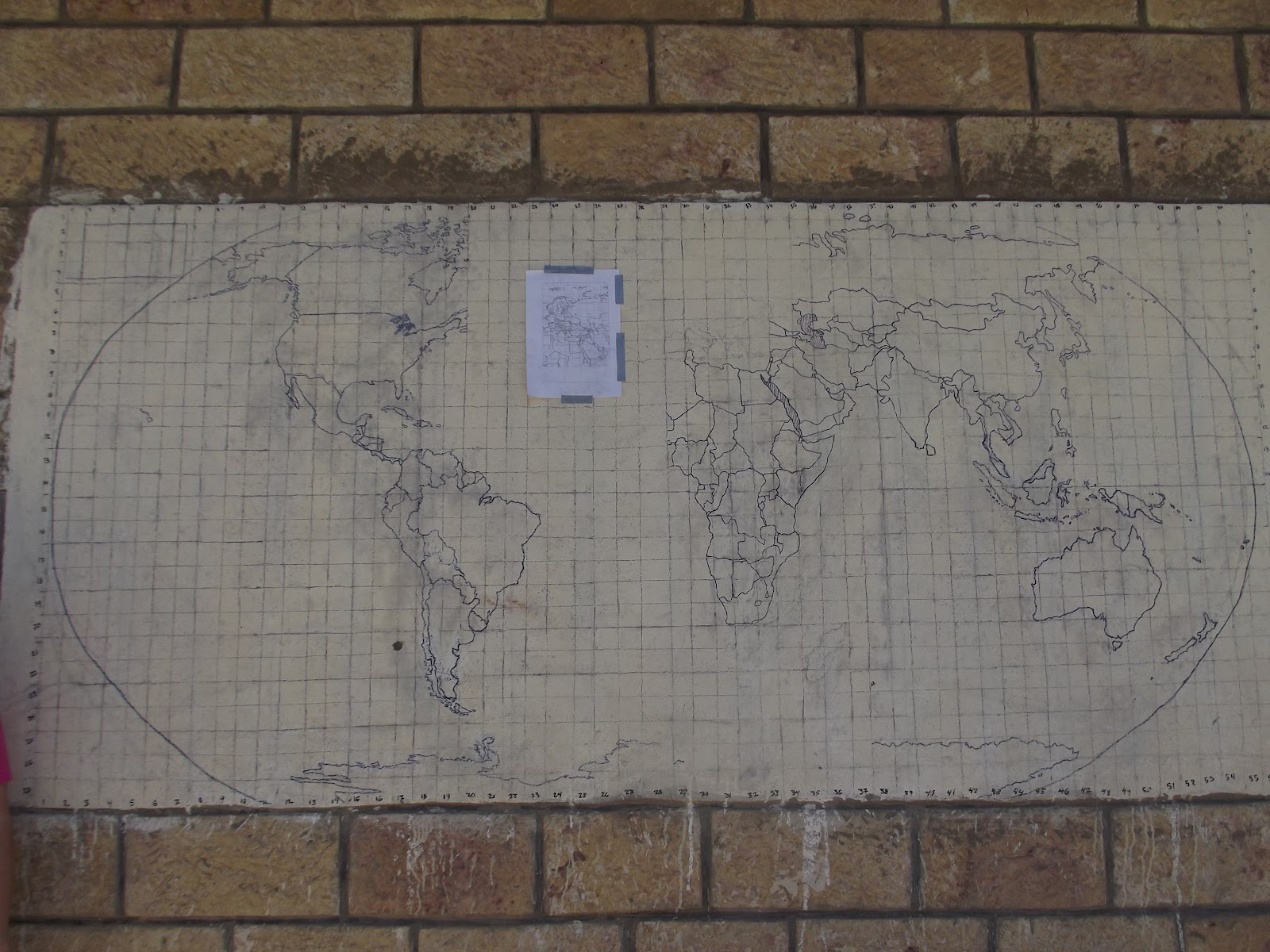
 While I’m just starting out, so far I have met with the teachers about environmental club and English curriculum ideas, provided seeds and project ideas for the club, and games and resources for remedial English lessons.  So, as I walked around the school grounds one day, I realized that not one of the murals on the school buildings was a world map, and, as Peace Corps has a great ‘World Map’ project (a manual of how to draw the world map in a grid, color code it, and label it) I decided it would be a great way to spend some time.
I spent the first few days drawing out the grid (it was over 2 meters wide and 1.25 meters tall…) and the next few days Katherine, a neighboring volunteer about 2 hours to the South East, and I drew and painted in the World Map.  I always tend to think highly of my geography skills until I do a project like this; usually as I search for 20 minutes to color in ridiculously small countries like Seychelles or Maldives, I realize I know nothing, and that I’ve been to a very small part of the world.  There were also other challenges like, where exactly should I put the line for South Sudan?  And what on earth is Zaire called these days??  Possibly the most frustrating moment though was one afternoon I set out to continue working on the map only to find some kid had taken a pen to Antarctica and (rather stupidly) written his name all over it.  At the moment I threw what I’m sure the teachers considered a right little fit and they assured me they would speak to the students and find the kid who did it (which, as they had his name, shouldn’t be too hard).  I slightly dramatically told them if it kept happening I wouldn’t bother finishing it- but this had taken us nearly 5 days, so I thought I had the right. 
One of the biggest surprises I found with the world map came from when a few of the other teachers asked to help.  We would give them a color of paint and then read off what countries were that color.  As I read down the list, I truly didn’t expect her to know where Thailand or Kyrgyzstan was, but when I announced Somalia, she hesitantly looked at the map and pointed to… South Africa?  As a neighboring country to Ethiopia, I thought for sure she would recognize the country; however, maybe the map is there to benefit the teachers as much as it is there to benefit the students.

Phase 1: believe it or not, the grid was the hardest part!!

Phase 2: getting closer...


Phase 3: and the finished map!!

Project Proposals:
Within the past month, I have been meeting regularly with the environmental club and its supervisor at my local high school and we are finally on our way to getting this well and tree nursery idea underway.  After a great discussion with the whole club, we decided that what the club really wanted to gain out of the following year was tree planting know-how, knowledge on tree varieties and uses, and irrigation and tree maintenance techniques.  So, with that in mind, the club advisor and I devised a plan to encompass all the students’ ideas.   And, now the fun part, I get to pull together all the information to write a grant proposal to get our well and supplies funded.  Things are moving along, although, we’re at a standstill until we can meet again and discuss the project budget… that always seems to be the hard part here; just getting people to find the time for a small discussion.
Operation Smile:
WAS SUCH A GREAT EXPERIENCE!!  We, being 10 Peace Corps volunteers, volunteered for 5 days a piece of the 10 day operation smile mission here in the Tigray region.  First off, Operation smile is an NGO that provides medical surgeries for cleft lips and cleft palates- they work all over the world, but this is their first mission in the Tigray region of Ethiopia.  We were divided into two shifts, the first half of the mission and the second half of the mission, and I and 4 other PCVs chose to work the second half.  We spent the first couple days at the hospital during their final two days of operations- I spend a lot of time working in the medical records and filling out charts, and then separating charts, but I also got to spend a lot of time in the pre-op room and the post-op room helping with (minor) translations, playing with kids, and just talking with patients and answering questions.  The last couple days we were there  we spent at the shelter that operation smile had set up for the patients (about 120 patients, which means over 300 people) working again to just answer questions, monitor patients who were having complications, and, of course, play with kids.  The last couple days of the mission are also doctor check-ups and clearance for the patients to leave, so we were really busy with that whole procedure- although, myself and one other volunteer got the fun job of compiling donated clothes and toys from the states into goodie bags for each of the patients; we had fun discussing if this would fit this kid, or if this girl would like this toy- it was especially rewarding to give the child with no shoes on a brand new pair of sandals (or the kid with no pants a brand new pair of pants.. how he got here with no pants is beyond me). 
It was very rewarding to work with operation smile; as Peace Corps volunteers we don’t always, if ever, see the benefits or outcomes of our projects; usually our projects are teaching skills and sharing knowledge- something we hope is making a difference, but not something we can always see.   With Operation Smile, you got to see a child with a cleft lip or palate go into surgery scared but determined, and then again on the other side, with a completed surgery making a wonderful, visible change.  We got to hear families thank us over and over again for the surgery and the chance for their child to have a normal life without discrimination and ridicule, and after a few days of recovery we got to see children and adults see and adapt to their new lifestyle and get ready to go home.  I was glad to be a part of it.


At the rock hewn church Gabriel Tselamao, my friend Kibrom and the priest showing me how the drums are used.


Posing with the Priest for a picture in front of a few of the beautiful murals at Gabriel Tselamao


A little late, but blog entry from May 8, 2012

Blog Entry 08/05/2013

Beautiful Eastern Tigray...the view from my house

Back in Tigray, and I have to say, after bussing to and back from Hawassa, I really have found a new appreciation for my home way up north.  While, sure, Hawassa was beautiful, the bus ride to it was not so much (sorry to any volunteers that have their post somewhere in that vast stretch of sand and acacia trees…).  My only point is that as we stepped off the plane in Mekele after three weeks out, it was a relief to breathe in the high-elevation cool air and see the surrounding mountains (though I did miss the trees).  It was even more of a relief to be back in my town in my own house and finally cook for myself again after eating out three large meals every day (not to mention tea and coffee break twice a day every day). 
I’m not sure if I appreciate or detest this, but Ethiopians seem to be as honest and blunt as they can be about everything including your appearance, and when I got back a few different people exclaimed, “you got fat!” -I would just like to note that fat is beautiful here, thank you very much- and thank you to one particular friend who compared me to John Seena…  Also people would pull this ‘eeew’ face and ask what was wrong with my skin (sunburn, mosquitos, and bedbugs...).  While this probably should have affected me far more than it did, I did at least start back on my Insanity workout every day, and I was just announced by a friend that I’m “no longer fat”.
Anyway, moving on to work!  I think every PCV experiences those first few months when it just seems like nothing will ever work out and work is never going to happen... and then bam!  One day it just all seems to come together.  I have finally got things rolling with my high school environmental club and have met with the students and discussed project ideas for next year.  Our plan is the apply for funding to put in a well and pump system so we can start some projects; one of the largest interests we found with the club members was learning about tree varieties and benefits as well as proper tree planting techniques and maintenance for trees.  So, what I proposed was to create a club tree nursery in which we could explore all of those things.  I want to include a demonstrative forest to show all the indigenous tree species for that area, experiment with fruit trees: lime, papaya, mango trees don’t grow at this elevation, so instead I want to see about apple trees and other typically western fruit trees (plums, cherries, etc.).
Secondly, I and another volunteer, Katherine, have started a world-map project at one of my primary schools just for fun more than anything else, but it’s nice to be busy and be painting.  This particular primary school didn’t have a world map yet and I thought it was a perfect opportunity to start the project.  Then, in a few weeks we will head to Katherine’s site to help with a world map painting at one of her schools. 
Thirdly, I have volunteered for a week with Operation Smile, and NGO that works with cleft palate children to provide corrective surgery.  Next week I’ll head into Mekele and spend a week volunteering at the hospital with them which is pretty exciting to be working with such a well-known NGO.
Finally, the Tigray group of volunteers are putting together a summer camp this summer and I just met with my high school director about this and about the selection process for our campers (each PCV is bringing 3 campers from their site).  It was just really exciting to see how well the idea of the summer camp was expressed; I don’t know who was more excited about the idea, the assistant director of the high school or the potential campers!  It was just really great to see people get excited about something we’ve been working on for so long.  Later this week I’ll head back to the school to have an informational meeting those interested in attending.
So as far as work goes, that’s where I am, and I just finished another meeting with my counterpart and the head of the tree nursery site here in town about a few projects in the planning stages with them- such as composting, a seed collection bank, and getting their well repaired.

Mmmm, Doriho Wat, or Chicken Sauce; my favorite Ethiopian Dish!


Drumming for Ethiopian Labor Day!


Friday, May 11, 2012

IST in Hawassa

I’m beginning to think I’m failing at this blogging thing, I’ve got so much to catch up on I’ll have to break it down into multiple posts! Well, here’s the first one:  IST in Hawassa!
First of all, let me just describe Hawassa to you, remember this is after coming from Tigray, land of sand and rocks.  Hawassa is this beautiful oasis town with a large lake at the center of its livelihood.  Filled with monkeys, hippos, and a wide variety of birds to satisfy any birdwatcher, Hawassa is beautiful.  In fact, the only thing most of us could find to complain about in Hawassa was the humidity and heat. Though not unbearable, I guess we all felt like we had to complain about something, especially since Peace Corps had placed us in a beautiful hotel with HOT WATER showers and a POOL (mind, the pool was filled with lake water, but hey, let’s not get too picky) right on the edge of the lake.  This is also, I might add, after Peace Corps had flown us down from Tigray region (I mean, it would have been a two day bus ride otherwise) and put us in a hotel in Addis Abeba for the night and them bussed us out the next day- I  was feeling pretty pampered. Besides being a beautiful lake side town, Hawassa has gotten a bit of an ex-pat vibe to it and you can find delicious Italian restaurants and high-priced resorts along its clean, cobblestone streets. 
Anyway, enough about the town and a little more on our in-service training (AKA, IST):  A 10 minute walk along the lake every morning led us to the hotel which was hosting our training sessions, a delicious Ethiopian/ferenji buffet lunch, and, of course, some tea/coffee breaks and snacks.  We had almost two full weeks of lecture sessions combined with hands-on field work, one week with our counterparts and one week without.  During our sessions we could see out the window monkeys swinging past or that rare hornbill that suddenly took our attention as far away from the lecture topic as possible.  I have to admit, it was increasingly hard to concentrate each time a little monkey poked his head in the room to scan for food (several times one jumped right in, claimed someone’s banana, and ran right back out- so cliché monkey, so cliché..).  Somehow, amid all the distractions, IST training was great and I felt like a gained a lot of valuable information.
About 4 or 5 days in, our counterparts joined us for a week in training in which we received some valuable project design management training, hands on training with things like drip-irrigation systems, land rehabilitation techniques, and tree nursery establishment practices.  This time around (as opposed to our first counterpart training during Pre-service training) was far less awkward and even fun to work together and really get some planning done.
Some of my favorite times during training were taking a boat ride out to see the hippos (and getting far closer to them than I would have thought acceptable), spending evenings at the little fish shacks on the beach eating less than a dollar, fresh, deep fried and served with hot pepper fish and watching the fishermen bring in their daily catch, or working together with the counterparts in hands-on projects and just enjoying the work, and, of course, spending time with people I hadn’t seen since our Pre-service training.  Each night was like a reunion and almost a little weird to be spending so much time around all those ‘ferenjis’. 
At the end of our conference, we had elections for different committee positions in Peace Corps; we have a Peer-Support Network committee, a Program Advisory Committee, a Volunteer Action Committee, and a Cross-Culture Committee.  The first one, the PSN, is pretty self-explanatory as far as their role, and they also give support for new Peace Corps Trainees (PCT’s) by way of projects and sessions during training.  The second one, PAC, works directly with the project framework for the incoming group and helps revise and determine what trainings should take place during Pre-Service Training (PST).  The third, VAC, is the committee to address volunteer in the field problems, comments and concerns, and then meet and work with the Peace Corps staff to problem solve and find solutions.  The final group, the cross-cultural committee (why they don’t get an acronym I don’t know) also help with PST and PCTS in cross cultural sessions and concerns. Whew, where I am going with this is that I was elected for the VAC committee and was very excited about it.
Long story short, I headed home to Tigray after IST, only to return to Addis a week later for VAC training and my first meeting.  It went well and I really enjoy being on the committee.  Now I am back in Tigray after a month and a half out and really starting to get some things started… but wait, more on that in the next blog J

Marabu Stork would hang out on the beach near all the fish huts just waiting for someone to throw out some scraps!


These Colobus monkeys were scavenging the yard in front of my hotel neirly every day...


Beautiful lake Hawassa


Hippo!  In lake hawassa


Just posing for a picture on our way in from seeing the hippos


Fishing on lake Hawassa


Thursday, March 15, 2012

A Day In The Life

What to write, what to write… I constantly find myself struggling to find that perfect blog post topic; something inspiring, amusing, and maybe a little educational all at the same time. Blogging seemed to be so much easier the first time around- during my first Peace Corps post all my experiences were new and fresh and I was eager to share my stories… Not that I no longer have stories to tell, I just forget that there might be someone out there who wants to hear them. So, with a little concern that I am being too boring and mundane, I decided to step back a little bit and describe my daily life here in Ethiopia.DSCF4691

Each morning I wake up around 7, 7:30-ish (well, that’s a li e, I wake up at about 6, try and convince myself to go for a run, and usually go back to sleep until 7). Most mornings I wake to my 16 year old host sister blaring music while she does her chores; this wouldn’t be so bad, other than Celine Dion, Backstreet boys, and Justin Bieber aren’t quite on my usual playlist. Depending on the song, I wake up in either a really great mood, or a really bad mood. After some morning chores of my own (making breakfast, doing dishes, getting water) I am off to the office or one of the schools, or, on some mornings, I pack a bag for a hike.

As I walk to work every morning I am usually greeted by numerous kids. Some have FINALY learned and remembered my name, while some have remembered parts of my name and made up their own so that I hear choruses of “kiki!” or “noko!”, or, one of my favorites, “Neekwa!”. Even these are a huge improvement from the “Ferenji!”, “You!”, and “Money!” (I even had a few kids call my ‘Ali Babua’, which I am still trying to figure out). It always amuses me that most kids are dying to shake your hand, or even touch your arm- which, when the smaller ones are covered in snot and dirt, isn’t as cute and endearing as you might think. Needless to say, I have introduced the fist-bump in my town, if for no other reason than sanitary purposes.DSCF4746

So, afternoon in my town I am usually back at my house, reading, sketching, or watching a show (what would I do without my computer??)- the area is, in my opinion, the perfect temperature; it gets cold at night so that sleeping inside with a blanket is comfortable, but hot during the day, so that most people relax during the hottest hours, and I don’t feel guilty not being productive. Some afternoons I sit and chat with my host family, sharing a bunna (coffee) ceremony and some injera and shiro (injera being the local flat bread, kind of like a large sour crepe, and shiro being a thick chickpea sauce). Some days this turns in to one of my least favorite games of “what’s this in Tigrinya?” where a certain lady in my compound points and asks what everything is called to test my Tigrinya skills. This wouldn’t be so bad other than some days she points out the most bizarre things and then ‘tisks’ at me when I don’t know what the names are. One day she pointed to each individual plant growing in the compound and asked for their names, which, of course I didn’t know, after which she dramatically told me that the previous volunteer was so smart, and she knew them, and I am not smart like her. That was one of those days I wanted to either yell at her or cry- neither of which is a good idea- so I instead hung out in my house the rest of the day. That is one thing both of my Peace Corps experiences have in common: life is an emotional rollercoaster.


Around 3 or 4, I usually make an attempt at being productive again, maybe heading to the office, a school, touring a dairy or poultry breeding farm, or conducting an interview for my CNA report (Community Needs Assessment) for Peace Corps. Some days I do none of the above and go hiking on the cliffs behind my town. Every now and again (usually those days when work isn’t going quite how I hope) I need that hour to spend hiking over the cliff side and finding that secluded spot for journaling or sketching- it helps me remember there is more to my experience here than work: for me it’s also about learning to take time to appreciate life and to see beauty in the common things. While I do hope to do valuable and productive work while I’m here, I have to remind myself it’s the people I meet and the interactions we share that can really make or break a Peace Corps service.


To finish my day, I’m usually home by 6, some evenings I go out for a walk with a friend or to a coffee house and we have tea and play dominoes or talk about work, and then, after I grudgingly do an hour of the Insanity workout (it does make every day feel like I did something productive!) I’m in bed and spending a little time on the internet by 9:30.

So there you have it, my typical day in Ethiopia; I have to admit I am enjoying my slow and relaxed lifestyle here, even if I do get a little impatient some days for work to pick up. Soon I am off to Addis Ababa again to attend our IST and receive information on funding sources and technical training. My plan is after I return, to start a few projects with the tree nurseries around town , one in composting, and two, to find funding for an improved irrigation system (right now were still using a well and buckets). It could get exciting! DSCF4646One of my tours of the tree nursery sites (this one is about 10 km away from my town) with my counterpart.

DSCF4674


One of the churches just outside my town is crawling with these Grivet monkeys; I spent the day there with a family feeding the monkeys injera and Kolo (roasted barley) right out of my hand!!


Saturday, February 25, 2012

Life in the land of Tigray... 2 months down, 22 more to go!

It's with releif that I feel like I'm starting to be productive here at post; it's only been 2 months since swearing in and moving here, but each day that I spend doing 'nothing' makes me feel more and more antsy to get started on something. I have to admit, though, it's nice to slow life down- I find myself taking time to notice things I wouldn't pay attention to before and making efforts I would have otherwise decided I didn't have time for. I do miss a real job however, and I am excited to get to the point in my service where (I hope) I have a busy schedule again.


The past month (since it has been a month since I last wrote- whoops... I'll work on that) has been a bit busier than my first month: I've been working on the English clubs and language curriculum at the High School and one of the Primary schools here in town, as well as observing the Environmental clubs at two primary schools and the high school in order to hopefully get involved in the future with projects and Environmental education. My intentions in going to the schools were solely for Environmental Education purposes, but each time I spoke to the head master about it, they were interested, but even MORE interested if I were willing to help them in the English program. So far I've spent a few days observing classes and speaking with teachers, as well as giving them additional resources for activities and games for classroom and English club lessons. Our plan at the high school is to get the club meeting on a regular basis and have discussions, games, activites, etc. But it's slow starting to say the least.


Aside from the schools, I have been spending time working on my CNA (Community Needs Assessment) for Peace Corps- a report and presentation given during our In Service Training. It's an analysis of the community from interviews, observations, and community participatory assessments to determine the strengths and weaknesses and possible projects for our service. Basically it's been a lot of interviews and walking around observing.. but it's actually been fun to gather the information and gives me an excuse to ask a lot of questions. Yesterday my counterpart and I took a trip to the neighboring town to see and observe the tree nursary sites there (my excuse was for my CNA, but I just really wanted to see the sites). We have one in our town, but since these were the two largest in our Woreda, I thought it would be a good idea to visit them. It was great having my counterpart along (he's rather busy most of the time so I don't see much of him) because it meant I could ask all the questions I wanted and he could translate since my Tigrinya is still minimal at best. The trip made me really excited to work with the tree nursaries in my area and we spent time discussing possible project ideas for them, such as compost pits, improved irrigation systems, fruit tree production, and (my personal imput) spice and herb hardens. I'm excited.

So, work completely aside, I still have more free time than I know what to do with... some of the ways I spend my free time (like watching all 6 seasons of How I Met Your Mother in a week) I'm not that proud of, but this area is an amazing landscape of rocky cliffsides and plateaus and is great for hiking- most of my desitinations being isolated churches either carved out of a cliffside or surrounded by thick forest land. Or, whenever things get too boring I head out and look for wildlife (usually in the forest areas surounding the churches. So far, I've seen enough bush and rock hyraxes to last a lifetime, but also some Grivet monkeys, the endemic-to-Ethiopia White cheeked Turraco, and signs of spotted hyenas and Genets. I recently learned that there is a 7500 hectre forest in my Woreda but nobody has really studied it to see what lives there- maybe a future project??
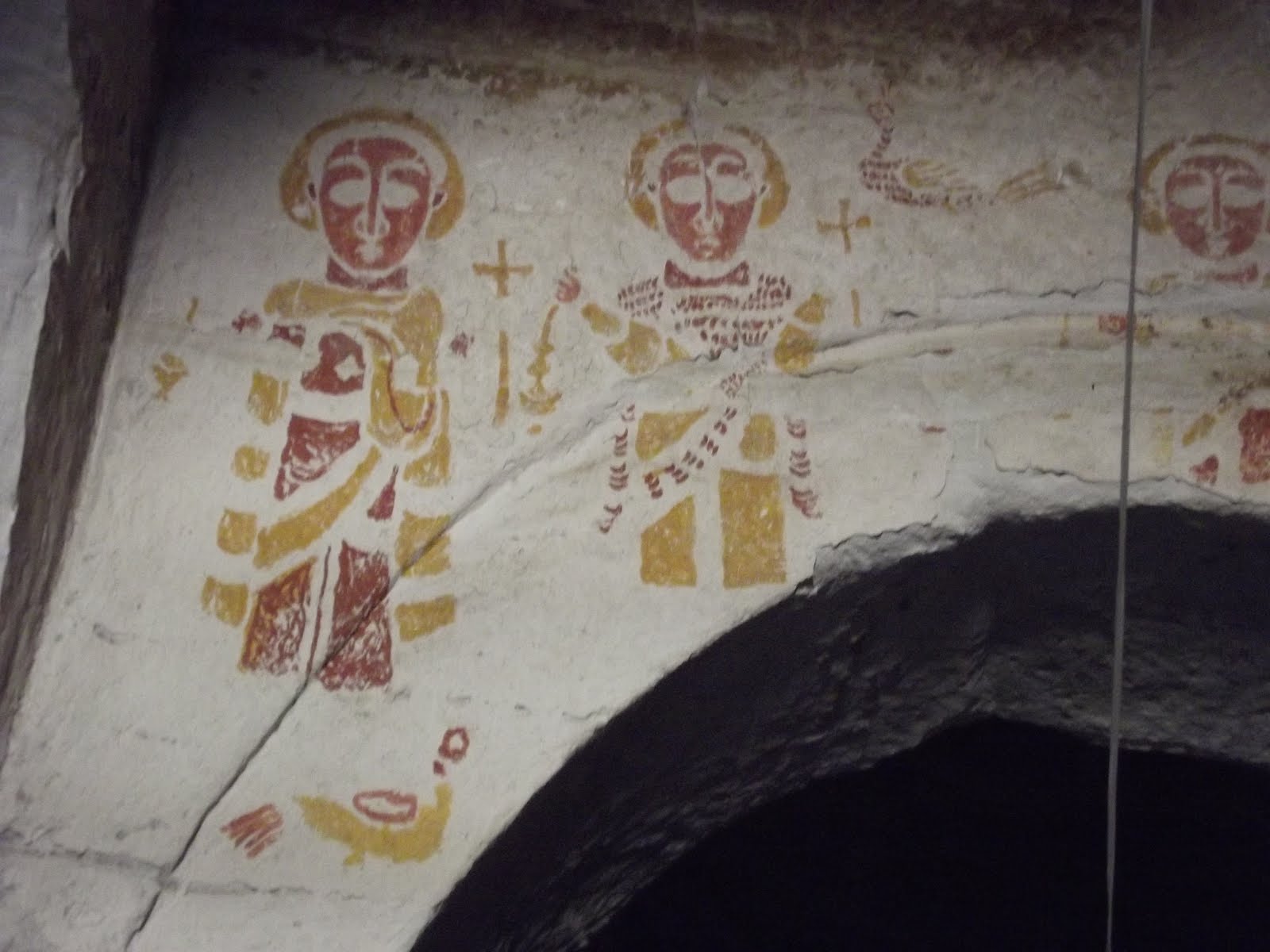


Above is the inside of the rock hewn church just outside of my town (the top picture as well). The church is called 'Ara'abata Insasat', or, 'The Four Animals'; after a lengthy discussion with the Priest, I gathered the church got it's name from the tapestry you can see in the back partly obscured by the curtain. The painting is of three Saints and in each corner is an animal: An angel, a lion, an ox, and some sort of bird. The church itself is hand-carved out of the mountain and even has a 5 metre high vaulted ceiling!! Nobody knows how old it is or who even created it- I was told God carved it out of the cliffside himself.


Unlike most of the churches I've seen so far, the paintings in Ara'abata Insasat seem older and almost stencil like- I would love to know more and I keep searching the internet for histories of these churches, but with not a lot of luck..


One of the many friendly rock-hyraxes in the cliffs surounding my town.


Eastern Tigray at it's finest- a more traditional homestead a few kilometres outside a neighboring town.


The Environmental group at one of the primary schools: each morning they bring a container of water from home (there is no running water at the school) to water their project trees.


The view at the top of the cliffs of one of my many hikes- I dont know why, but I can't seem to upload a panoramic photo without it becoming blurry...